
Advance AI-Powered Systematic Reviews and Structural Topic Modeling (Group 8)

Wishlist Share

About Course

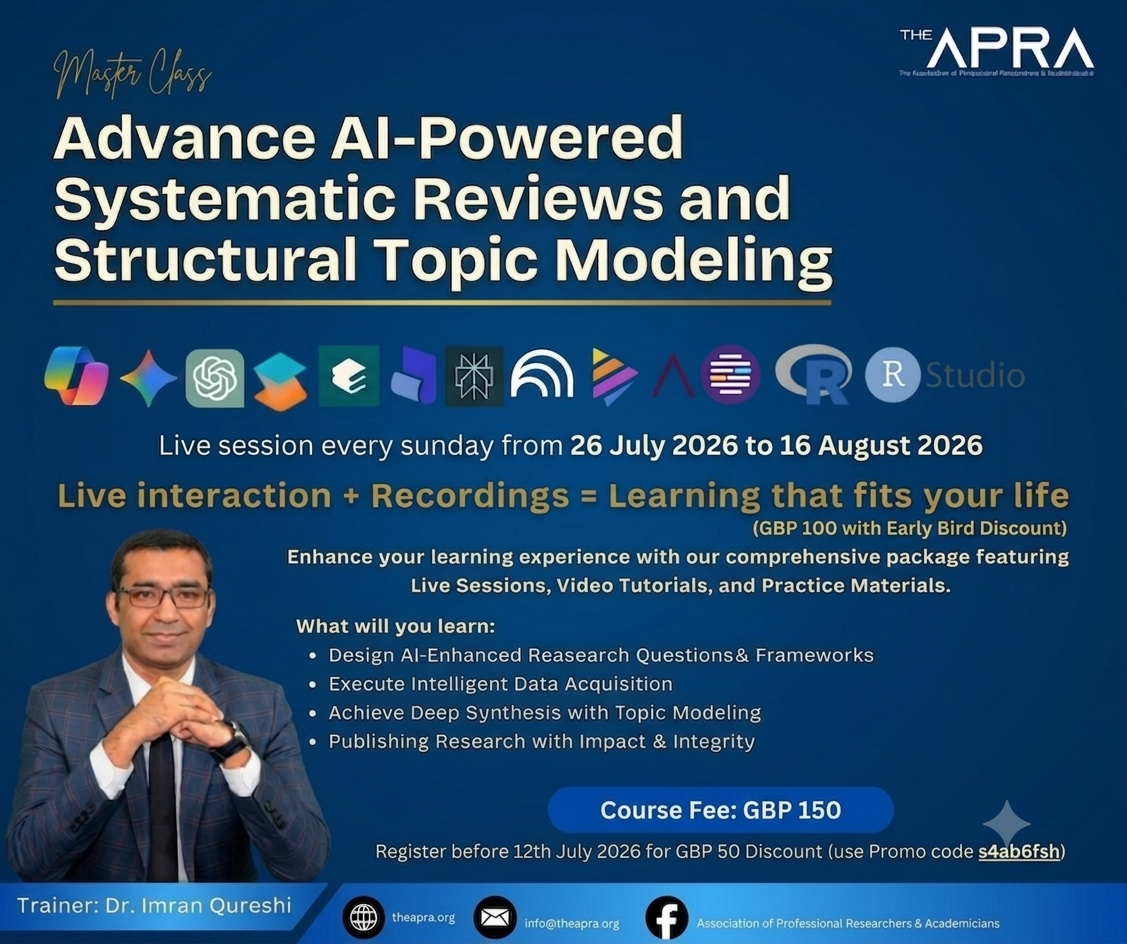
This advanced masterclass moves beyond foundational AI applications, empowering you to harness sophisticated artificial intelligence, including powerful topic modeling techniques like Latent Dirichlet Allocation (LDA) and Structural Topic Modeling (STM), to conduct systematic literature reviews with unparalleled depth and efficiency.

You will journey from crafting highly precise, AI-refined research questions to deploying intelligent data acquisition strategies using the latest AI tools for comprehensive searching, screening, and crucial metadata collection. Dive deep into the analytical core of modern research by mastering LDA and STM to uncover latent thematic structures and trends within vast literary corpora. Learn to synthesize these complex findings and develop robust theories, all augmented by AI-driven knowledge discovery.

The course culminates in mastering AI-assisted reporting, creating impactful data visualizations, and navigating the ethical landscape of AI in academic writing. As a capstone to your advanced learning, you will be introduced to the transformative concept of AI-powered Living Systematic Reviews, preparing you to maintain and contribute to continuously updated evidence syntheses in rapidly evolving fields.

Show More

What Will You Learn?

  • Craft precise prompts using the 4C formula to optimize AI-driven literature searches and data extraction.
  • Develop highly targeted research questions utilizing generative AI tools and the robust PICO(S) framework.
  • Execute intelligent data acquisition by navigating databases and applying PRISMA guidelines for comprehensive screening.
  • Automate data extraction from PDFs using advanced AI platforms like SciSpace and Elicit to gather key findings and metadata.
  • Achieve deep literature synthesis and discover thematic clusters using Structural Topic Modeling (STM) and bibliometric analysis.
  • Identify critical research gaps and overarching trends by seamlessly integrating AI-generated insights into your workflow.
  • Draft high-impact manuscripts and structured systematic review reports efficiently with specialized AI writing assistants like Jenni AI and NotebookLM.
  • Create compelling visual frameworks and graphical abstracts using tools like Miro and Napkin AI to effectively communicate your research impact.

Course Content

Module 1: Conceptualization & AI-Assisted Inquiry
Focus: Building a solid foundation in Systematic Literature Review (SLR) methodology and formulating highly precise research questions using AI. • Fundamentals of SLR: Understanding the core concepts, significance, and step-by-step process of conducting a rigorous review. • Prompt Engineering Mastery: Learning advanced prompting techniques, including the 4C Formula (Call to action, Content, Constructs, Context) and the RTF Framework (Role, Task, Format) to optimize interactions with AI models like ChatGPT, Gemini, and Bing. • Brainstorming and Question Design: Utilizing generative AI for initial brainstorming, exploring trends, and identifying research gaps. • PICO(S) Framework: Structuring evidence-based research questions by defining Population, Intervention, Comparison, Outcome, and Study Design. • The Goldilocks Test: Scoping your research to ensure the inquiry is practically feasible—neither too broad nor too narrow.

Module 2: Intelligent Data Acquisition & Search Strategy
Focus: Navigating the "information deluge" by establishing systematic search strategies and extracting data effectively. • PRISMA Guidelines Integration: Establishing clear inclusion and exclusion criteria, and defining robust quality assessment standards to select relevant literature. • Keyword Generation & Database Navigation: Using AI to discover relevant keywords and synonyms. Mastering query development and advanced search strategies using major databases like Scopus and Web of Science. • Data Curation & Filtration: Exporting metadata into Microsoft Excel and leveraging Power Query to clean, merge, and filter extracted records. • AI-Driven Data Extraction: Gaining hands-on experience with AI tools such as SciSpace and Elicit to automatically extract methodologies, study characteristics, and key findings directly from PDF articles.

Deep Literature Synthesis & Classification
Focus: Transitioning from raw extracted data to knowledge discovery through advanced topic modeling and thematic clustering. • Bibliometric Analysis: Utilizing statistical mapping software like VOSviewer and the Biblioshiny R package to analyze citation networks, co-authorship patterns, and keyword co-occurrences. • Structural Topic Modeling (STM) & Latent Dirichlet Allocation (LDA): Applying cutting-edge machine learning methodologies to uncover latent thematic structures and track thematic evolution across thousands of documents. • AI-Assisted Coding & Clustering: Using Natural Language Processing (NLP) for keyword extraction and semantic similarity to automatically categorize literature. You will practice using Notebook LM to chat directly with your datasets and segregate literature into cohesive streams for comparative analysis.

Module 4: Review, Reporting, & Communicating Impact
Focus: Synthesizing the final insights and drafting a high-impact manuscript suitable for top-tier academic journals. • Synthesizing Findings: Integrating findings across AI-generated themes to identify overarching trends, theoretical developments, limitations, and future research directions. • Generating Summary Tables: Using tools like Elicit, SciSpace, and Powerdrill to compile structured comparative tables that highlight significant studies. • AI-Assisted Manuscript Drafting: Leveraging specialized AI reading and writing assistants, such as NotebookLM and Jenni AI, to draft your systematic review report, manage references, and maintain a clear audit trail of your data. • Visualizing Theory: Transforming text-based insights into graphical abstracts and conceptual frameworks using platforms like Miro and Napkin AI to enhance your final presentation.

Student Ratings & Reviews

No Review Yet
No Review Yet